What causes ice dams on roofs?
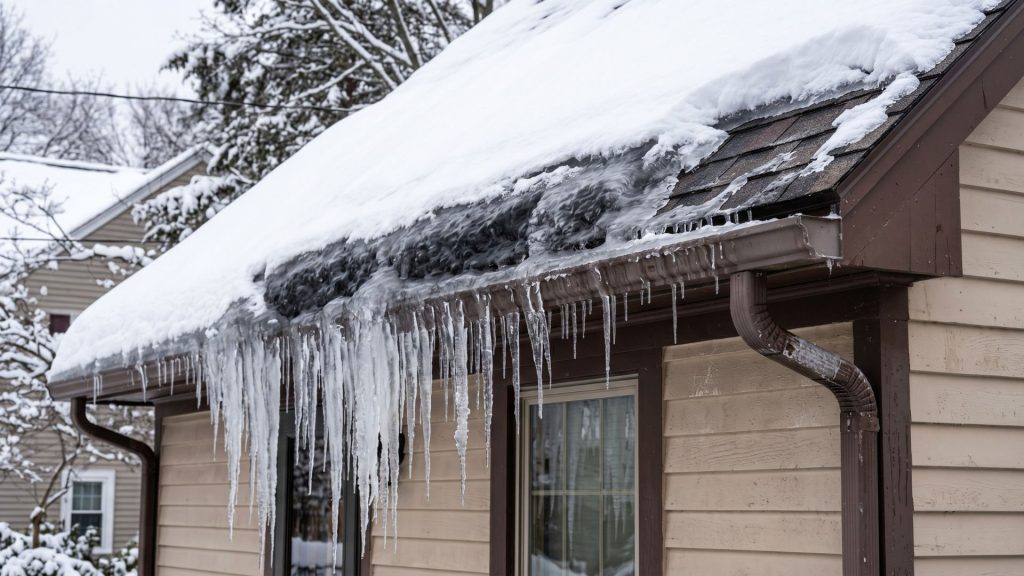
Ice dams form when warm air from the attic melts the underside of snow on the roof, the meltwater runs down to the cold eaves, and refreezes there into a ridge of ice. That ridge then traps subsequent meltwater behind it, forcing the water back up under the shingles where it can leak into the home.
The root cause is almost always uneven roof-deck temperature not the snow itself.
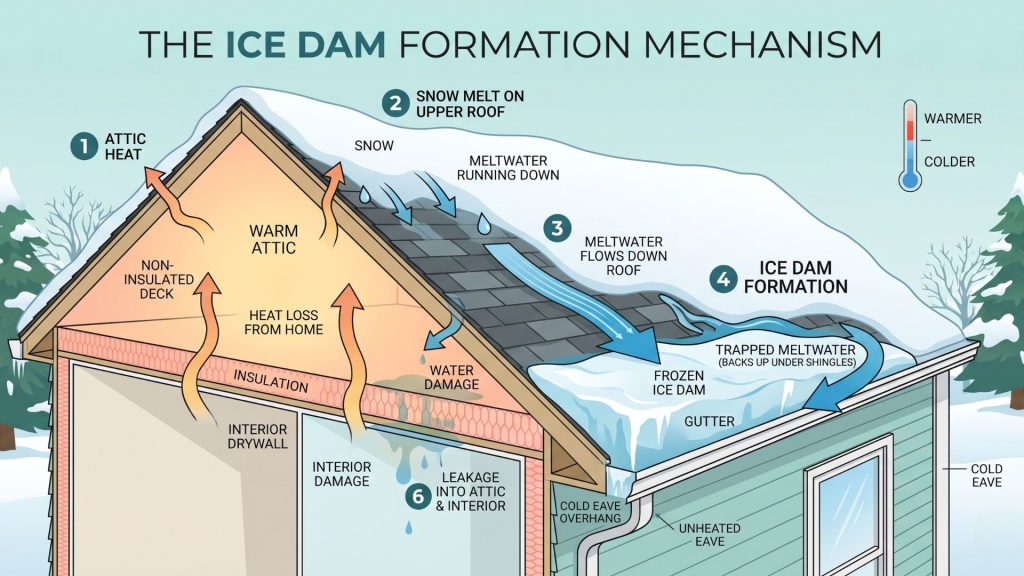
Uneven roof-deck temperature is the root cause of ice dam formation — not the snow itself.
How freeze-thaw cycles damage shingles
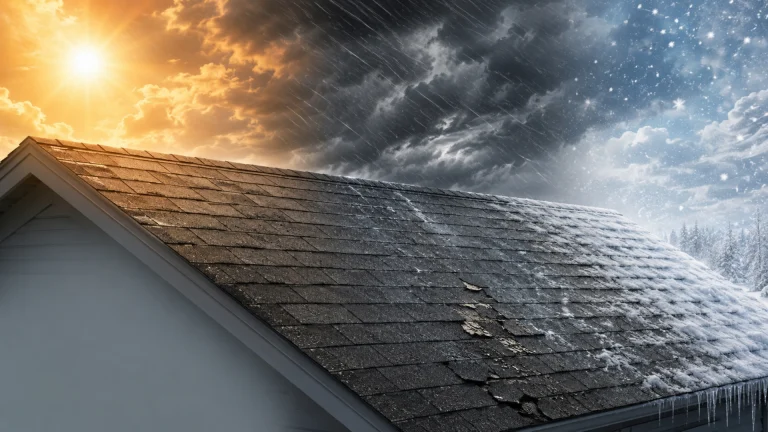
Freeze-thaw damage is the related-but-separate mechanism that destroys aging asphalt shingles in cold climates. Water gets into a microscopic crack or under a lifted granule, freezes, and expands by about 9% in volume. That expansion widens the crack. When the ice melts and refreezes, the crack widens further. Over a winter that crosses the freezing point dozens of times, hairline imperfections become full failures.
5-10
years
Asphalt shingles in cold climates often fail 5–10 years sooner than the same shingles in moderate climates, with freeze-thaw being the primary accelerator.
Warning signs of ice dam and freeze-thaw damage
Icicles hanging from the eaves — not always a problem on their own, but a signal that meltwater is reaching cold edges
A visible ridge of ice along the eaves or in valleys
Water stains on interior ceilings or walls near exterior walls
Cracked, curled, or lifted shingles, especially along the lower edge of the roof
Granule loss accelerating along the eaves
Soft spots in the roof deck, visible from inside the attic
Mold or staining in the attic insulation near the eaves
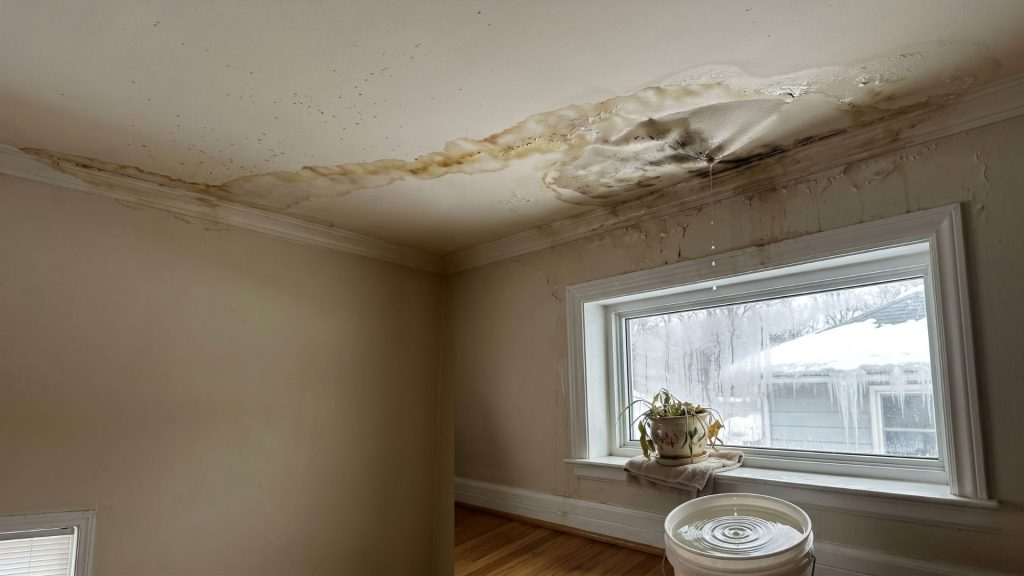
Interior water staining near exterior walls is often the first sign of ice dam damage.
How to prevent ice dams
Ice dam prevention is environmental the goal is to keep the entire roof deck at a temperature close to the outside air, so snow melts evenly (or doesn't melt at all). Three fixes do most of the work:
1
Improve attic insulation
Heat loss from the conditioned space into the attic is what melts the snow from below. Bringing attic insulation up to R-49 or higher (in cold climates) dramatically reduces that heat loss and is the single most effective ice dam prevention step for most homes.
2
Balance attic ventilation
Even with good insulation, some heat reaches the attic. Balanced soffit-to-ridge ventilation flushes that heat out before it warms the underside of the roof deck. Aim for 1 sq ft of net free vent area per 300 sq ft of attic floor, split evenly between intake (soffit) and exhaust (ridge).
3
Seal attic air leaks
Recessed lights, attic hatches, plumbing penetrations, and ductwork can all leak warm interior air directly into the attic. Sealing these bypasses prevents the warm air from reaching the deck in the first place and it improves heating efficiency in the conditioned space below.
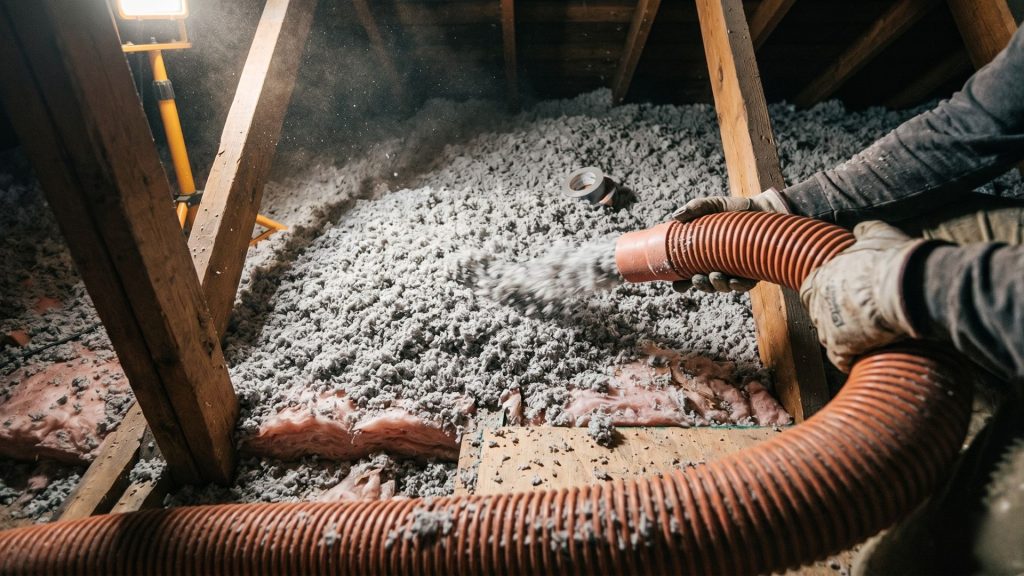
Insulation, ventilation, and air sealing together address ice dam formation at the source.
How to protect shingles from freeze-thaw damage
Freeze-thaw is harder to prevent at the source the climate is the climate. Protection comes from making the shingle itself more resilient to the cycle. Two strategies work:
1
Replace shingles before they reach end of life
Older, brittle shingles are most vulnerable to freeze-thaw expansion. Tracking shingle age and replacing before they reach the failure threshold is the conservative approach but it runs into the $20,000–$40,000+ replacement cost.
2
Apply Structural Roof Rejuvenation
GoNano's NuRoof line restores the asphalt's flexibility and adds a nano-penetrating layer that reinforces the shingle structure from within. GoNano NuRoof Revive (for roofs aged 6–20 years) and GoNano NuRoof Fortify (for newer roofs) both carry independent third-party testing:
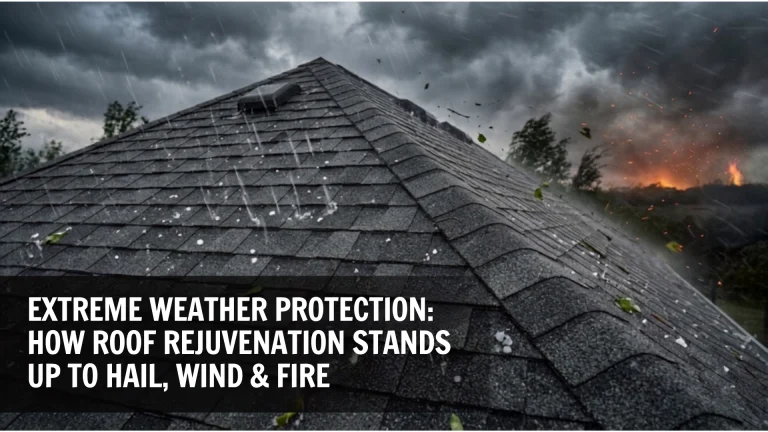
Hail impact UL2218 Class 4
Wind ASTM D3161 Class F
Fire UL790 Class A
The same nano bond that protects against hail and wind also reduces the micro-cracks that freeze-thaw cycles exploit at the eaves and along keyways.
Warranties: GoNano NuRoof Fortify carries a 15-year warranty, and GoNano NuRoof Revive carries a 10-year warranty. Both are installed exclusively by Certified GoNano Contractors, and each warranty is fully transferable upon sale of the home
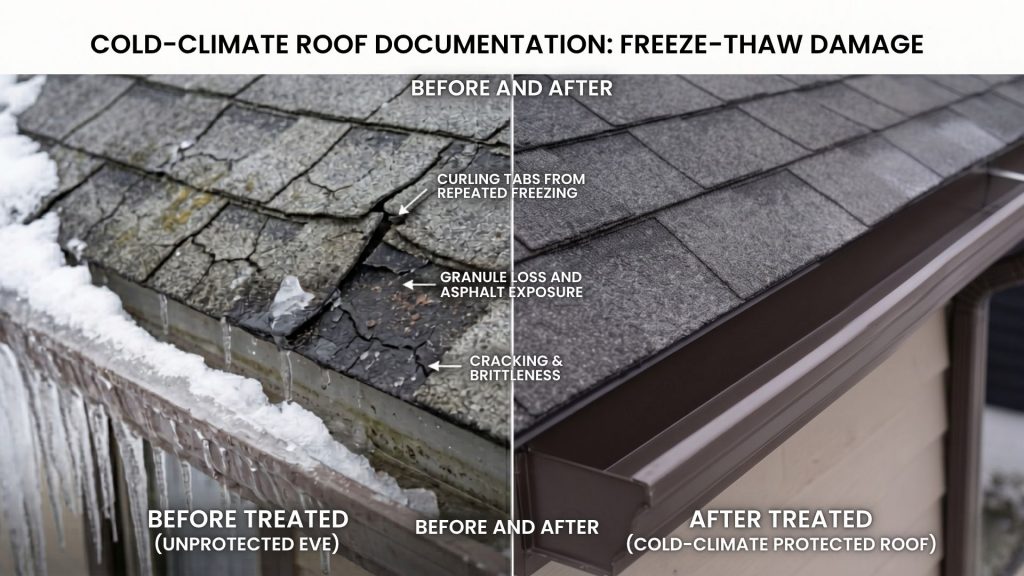
Freeze-thaw cycles widen micro-cracks in aging shingles every time the temperature crosses the freezing point.
Where GoNano fits in the cold-climate roof picture
Ice dam formation and freeze-thaw shingle damage are two related problems with two different solutions. Attic insulation, ventilation, and air sealing address ice dam formation at the source. Structural Roof Rejuvenation addresses what happens to the shingle when ice and water reach it anyway.
Certified GoNano Contractors working in cold-climate markets have observed that homes treated with NuRoof tend to handle subsequent winters noticeably better particularly in terms of shingle integrity along the eaves, where ice accumulation does the most damage. The combination of an improved attic environment and a nano-penetrated, more resilient shingle gives a cold-climate roof its best chance to make it through harsh winters intact.
For a homeowner facing chronic ice damming, the most effective approach is to fix the attic environment and apply Structural Roof Rejuvenation in the same season. Each addresses what the other cannot.
1
Get an interior assessment first
Water that's reached the ceiling has often damaged insulation, drywall, and possibly framing.
2
Document everything for insurance
Most policies cover sudden water damage from ice dams under dwelling coverage.
3
Address the environmental cause first
Tackle insulation, ventilation, and air sealing before any repair is made otherwise the same damage will recur next winter.
4
Schedule a roof assessment
Book a roof assessment with a Certified GoNano Contractor to evaluate whether Structural Roof Rejuvenation can extend the remaining roof life and reinforce the shingle against future winters.
Find a Certified Contractor Near You
Secure your roof's future with the world's only Structural Roof Rejuvenation technology.
Frequently asked questions
Are ice dams covered by homeowner's insurance?
Most policies cover sudden water damage from ice dams under dwelling coverage. Coverage for the ice dam removal itself or for the roof repair varies by policy. Document damage thoroughly and contact the insurer before initiating major repairs.
Will a heated cable along the eaves prevent ice dams?
Heated cables can reduce ice dam formation in problem areas but they treat the symptom rather than the cause and they add to electricity costs every winter. Insulation, ventilation, and air sealing are the durable fix.
Does removing snow from the roof prevent ice dams?
Roof rakes remove snow from the lower portion of the roof and can prevent ice dam formation, but they don't fix the underlying environmental cause. Used as a backup measure during heavy snow seasons, they help. Used as the only strategy, they're a temporary patch.
How does Structural Roof Rejuvenation help with cold-climate damage?
NuRoof's nano-penetrating formula bonds with the shingle structure and restores flexibility, which reduces the micro-cracks that water exploits during freeze-thaw cycles. The same product is independently tested for impact, wind, and fire resistance so the cold-climate benefits come alongside year-round Extreme Weather Protection. Ice dam formation itself is primarily an attic-environment issue, so the most effective approach pairs NuRoof with proper insulation and ventilation.
Can rejuvenation be installed on a roof that already has ice dam damage?
If the deck and shingles are still structurally sound, yes. A Certified GoNano Contractor performs a free assessment to determine whether the existing damage rules the roof out as a candidate.